Context and challenge
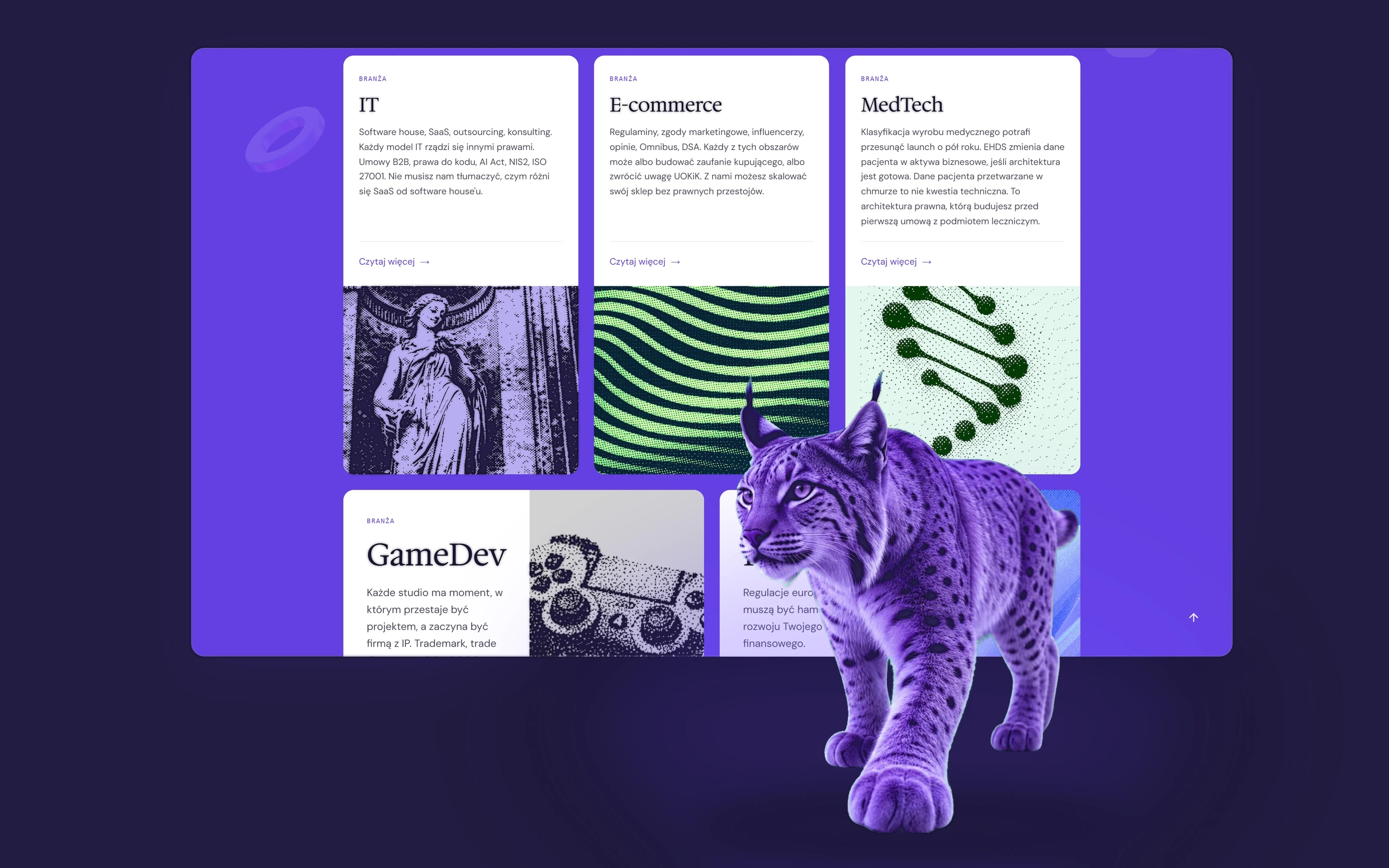
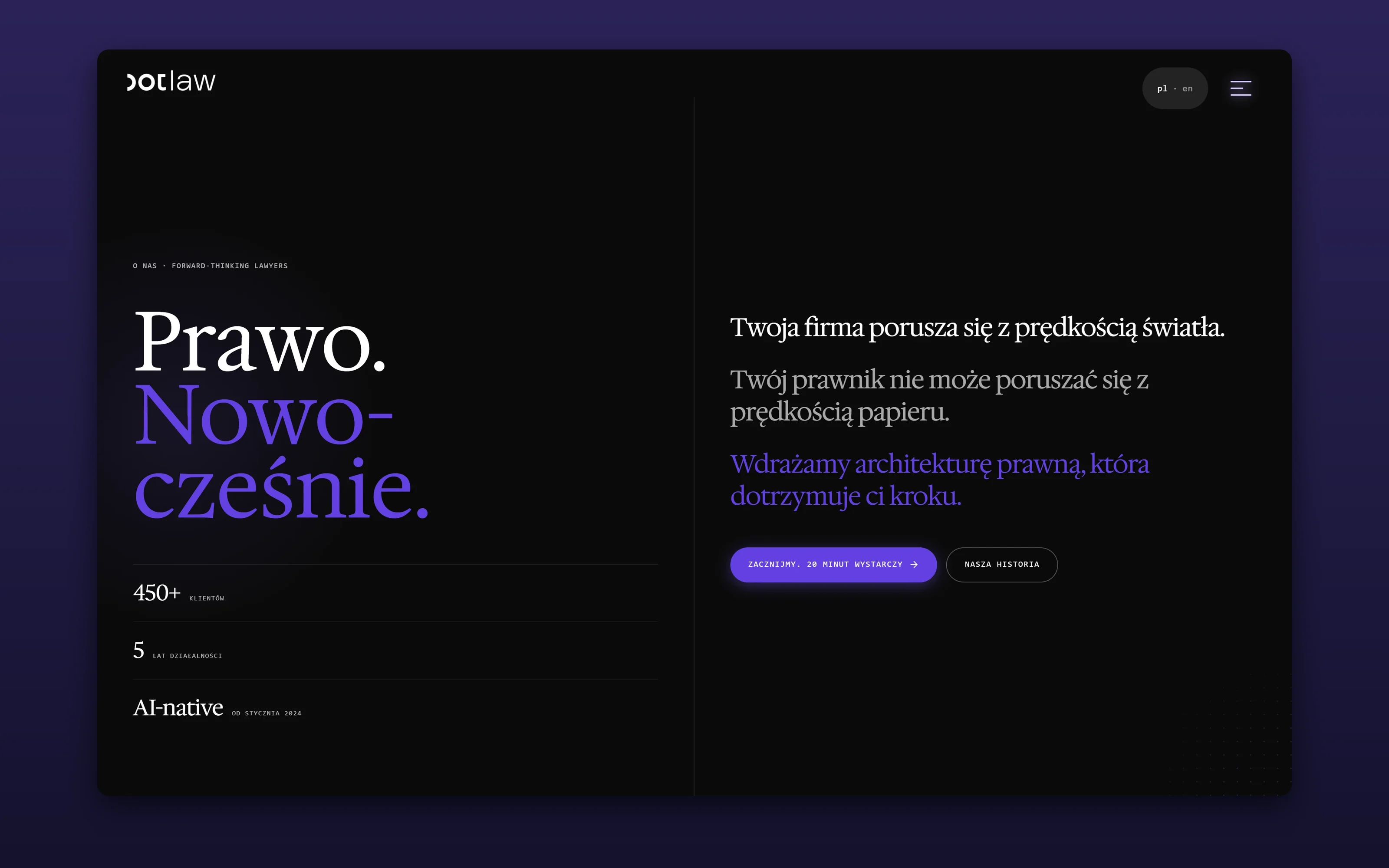
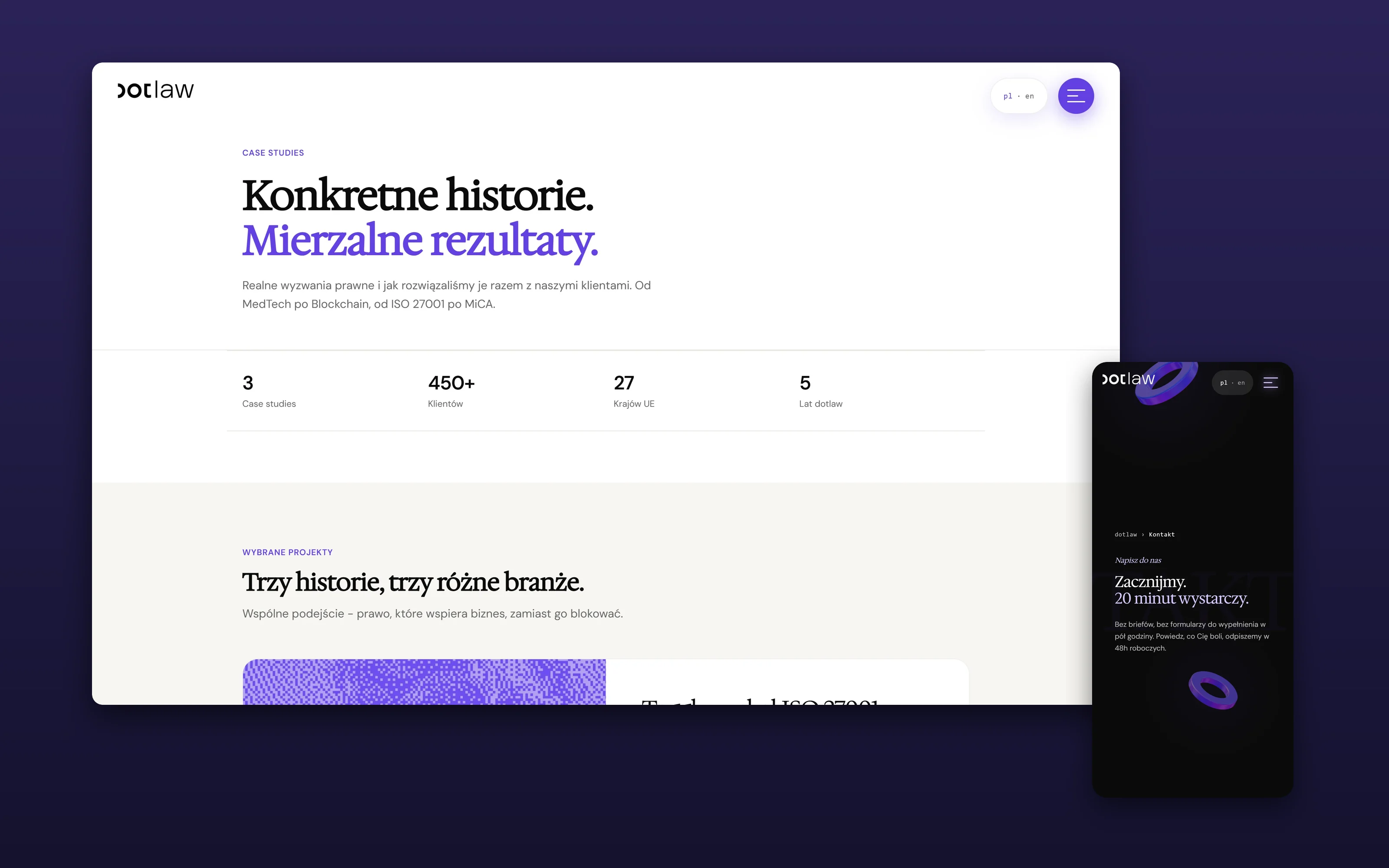
dotlaw advises companies in IT, SaaS, e-commerce, MedTech, GameDev and FinTech. Its previous website used the visual language of a conventional legal practice and hid the firm’s strongest distinction: these lawyers understand how technology companies build, sell and regulate products.
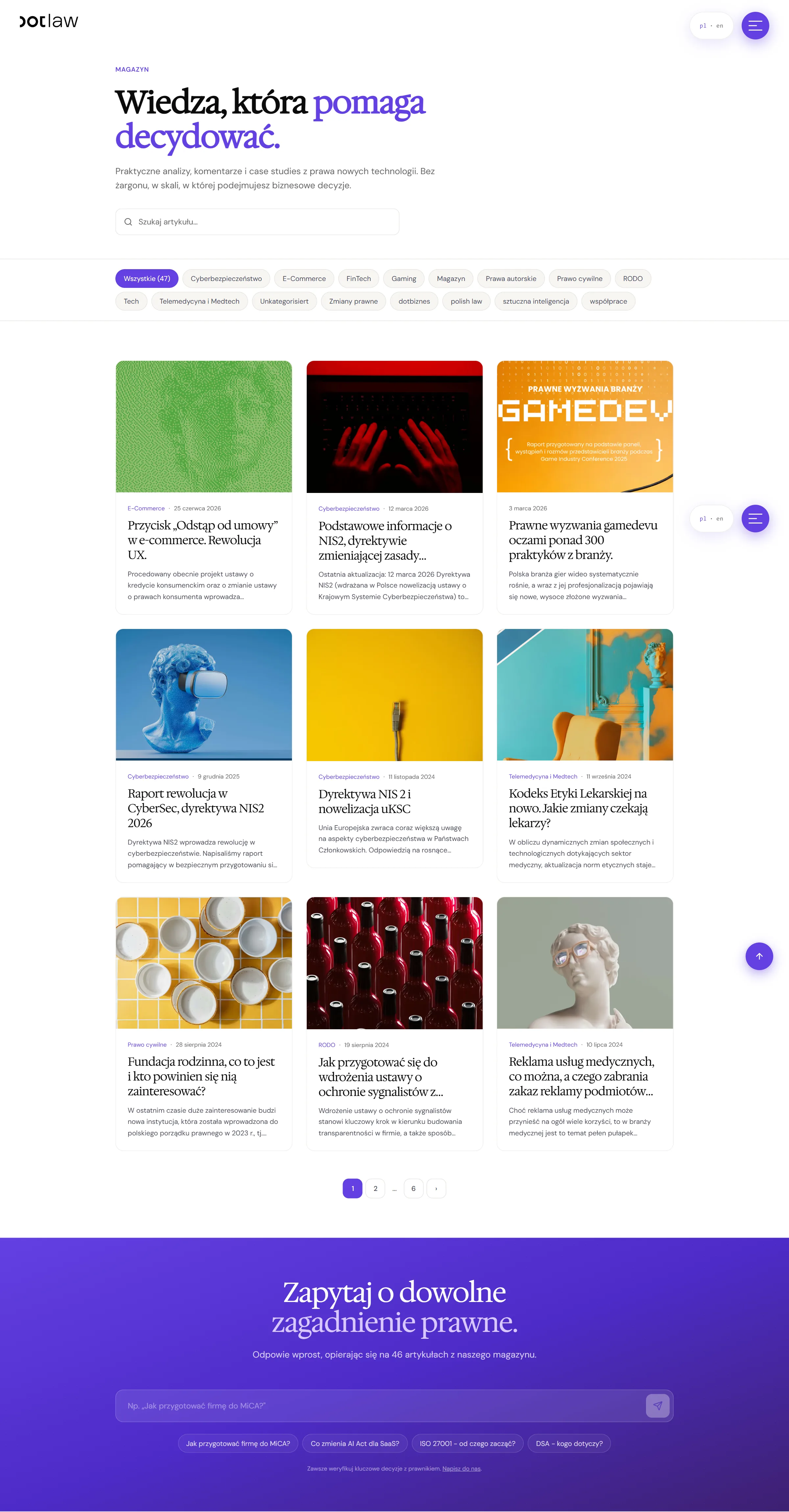
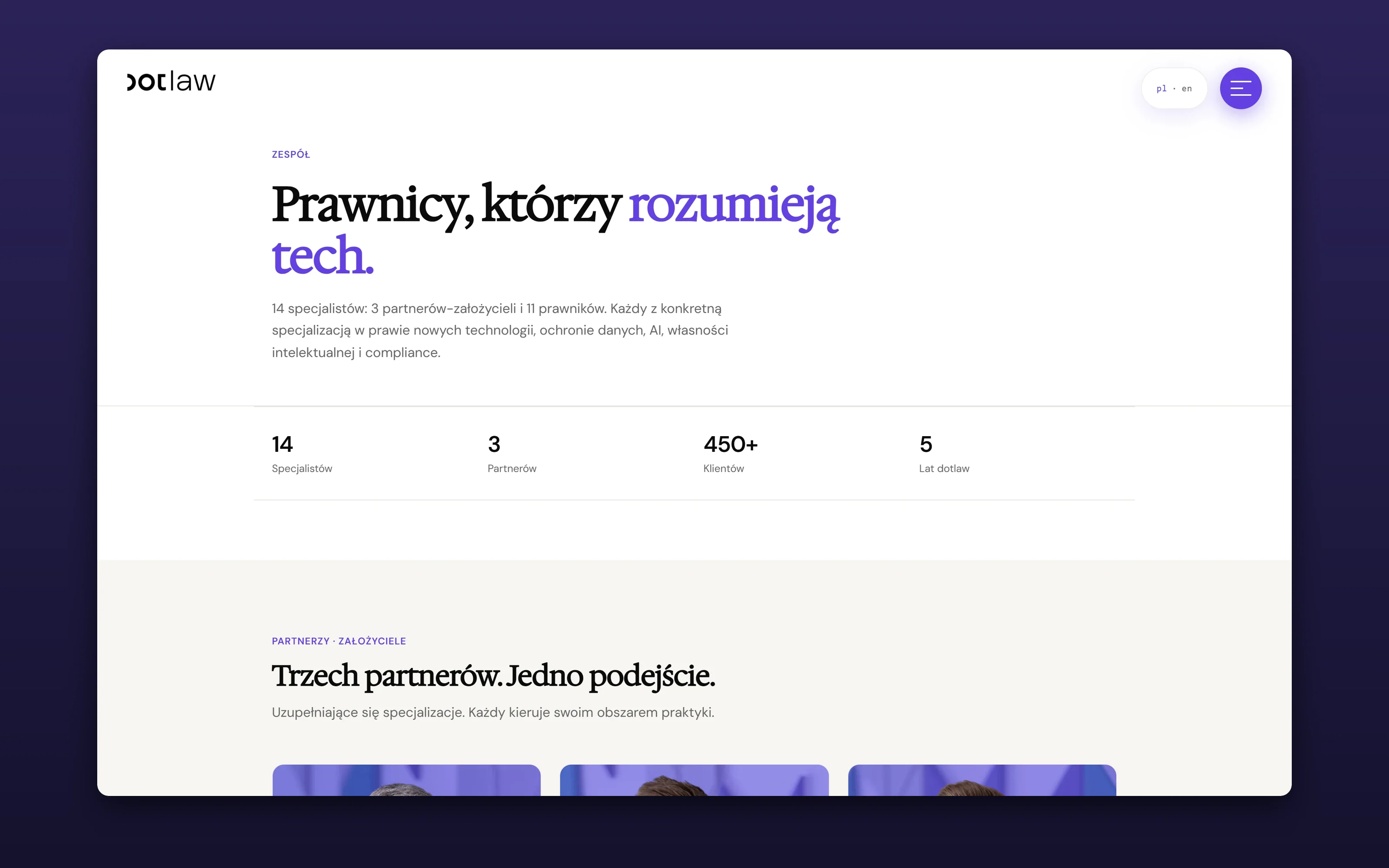
The new system had to support a substantial publishing operation. Lawyers maintain specialisations, industry pages, case studies, team profiles, legal guides, campaign landing pages and magazine articles in Polish and English. Editors needed direct control of that content, while search engines and AI systems needed stable routes, structured data and clear relationships between people, expertise and publications. Enquiries also had to go straight into the firm’s sales process.
Solution
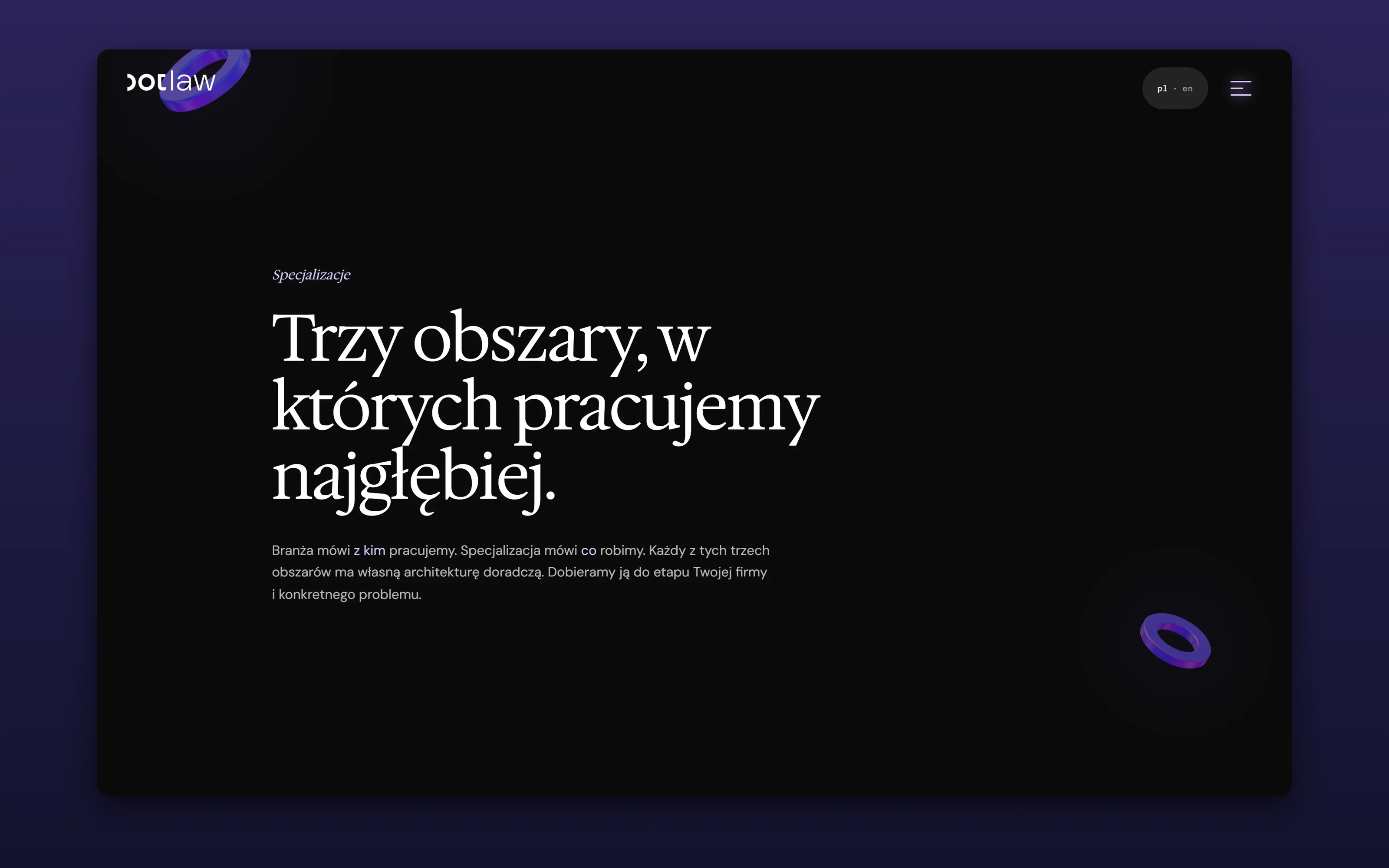
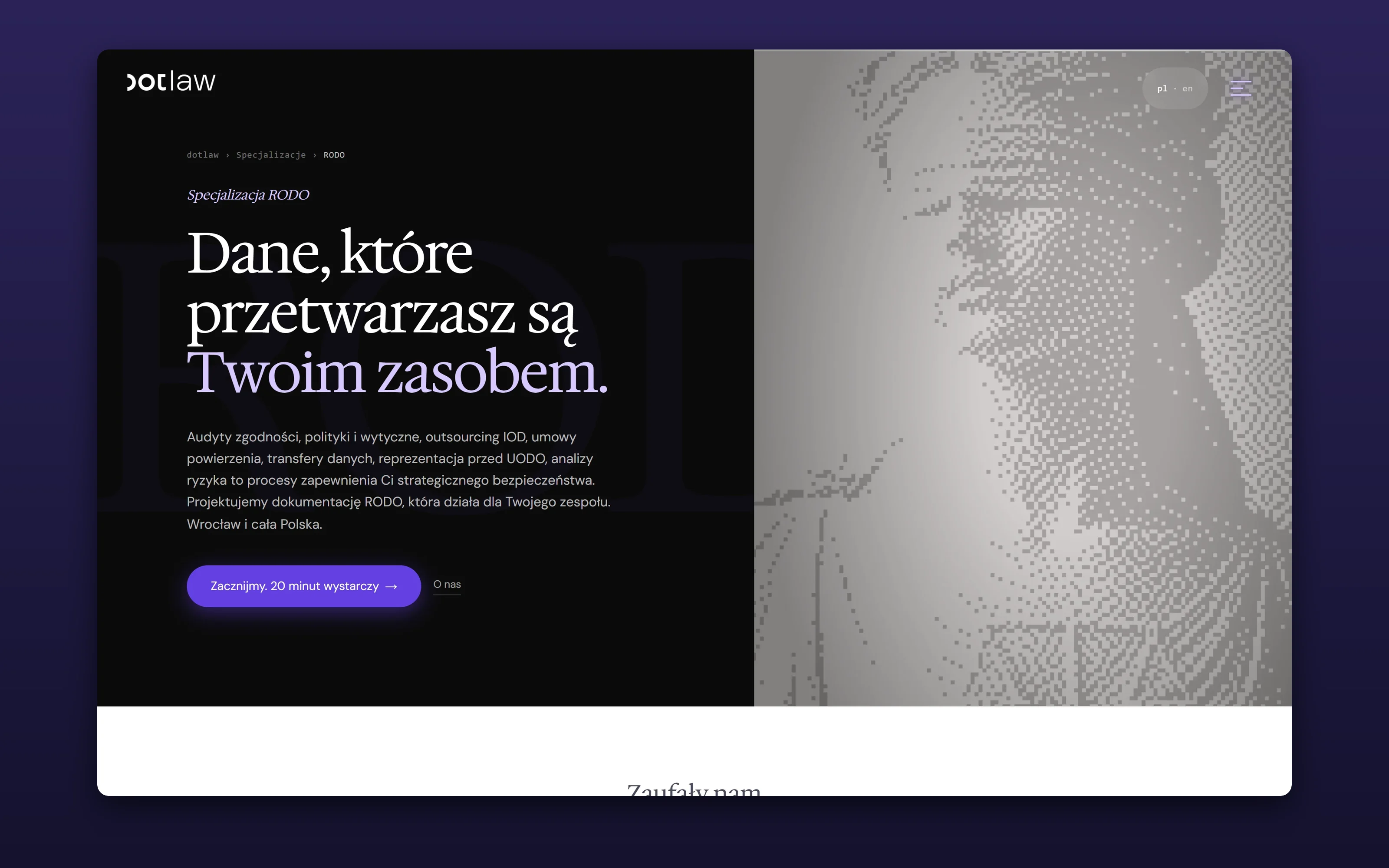
I designed the content model, interface and production architecture, then built dotlaw.co on Next.js 16, React 19 and Sanity 4. Industries, legal specialisations, case studies, people, magazine articles and campaign pages are separate content types with Polish and English variants. Editors work in an embedded Sanity Studio, and signed webhooks refresh the relevant pages as soon as content changes.
Supabase stores enquiries and the PostgreSQL pgvector index used by semantic magazine search. The AI search streams answers from the firm’s own published material through the Vercel AI SDK. New and edited articles are reindexed after publication, with a scheduled job covering later updates. Contact enquiries are validated, rate limited and delivered through three connected channels: Supabase, email and Pipedrive. PostHog records product analytics.
The search layer includes canonical routes, sitemap generation, structured JSON-LD for the firm, lawyers, articles, services and case studies, plus separate llms.txt files for AI crawlers. Editorial typography and the lynx visual system keep long legal content readable and make the technology-sector positioning visible. The same product relationship later grew into Akademia dotlaw, a separate e-learning platform.
Results and stack
A bilingual legal publishing platform with structured content, semantic search and a connected lead pipeline.
- PL / EN
- one content system serving two language versions
- Sanity
- legal content the firm publishes itself
- 3 channels
- each enquiry routed to Supabase, email and Pipedrive
2026Next.js 16React 19TypeScriptSanity 4SupabasePostgreSQL + pgvectorVercel AI SDKPostHogPipedriveVercel